
Rolex Yacht-Master 40mm Series Deep Dive: A Top-Tier Replica QC Guide for Super Clone Enthusiasts
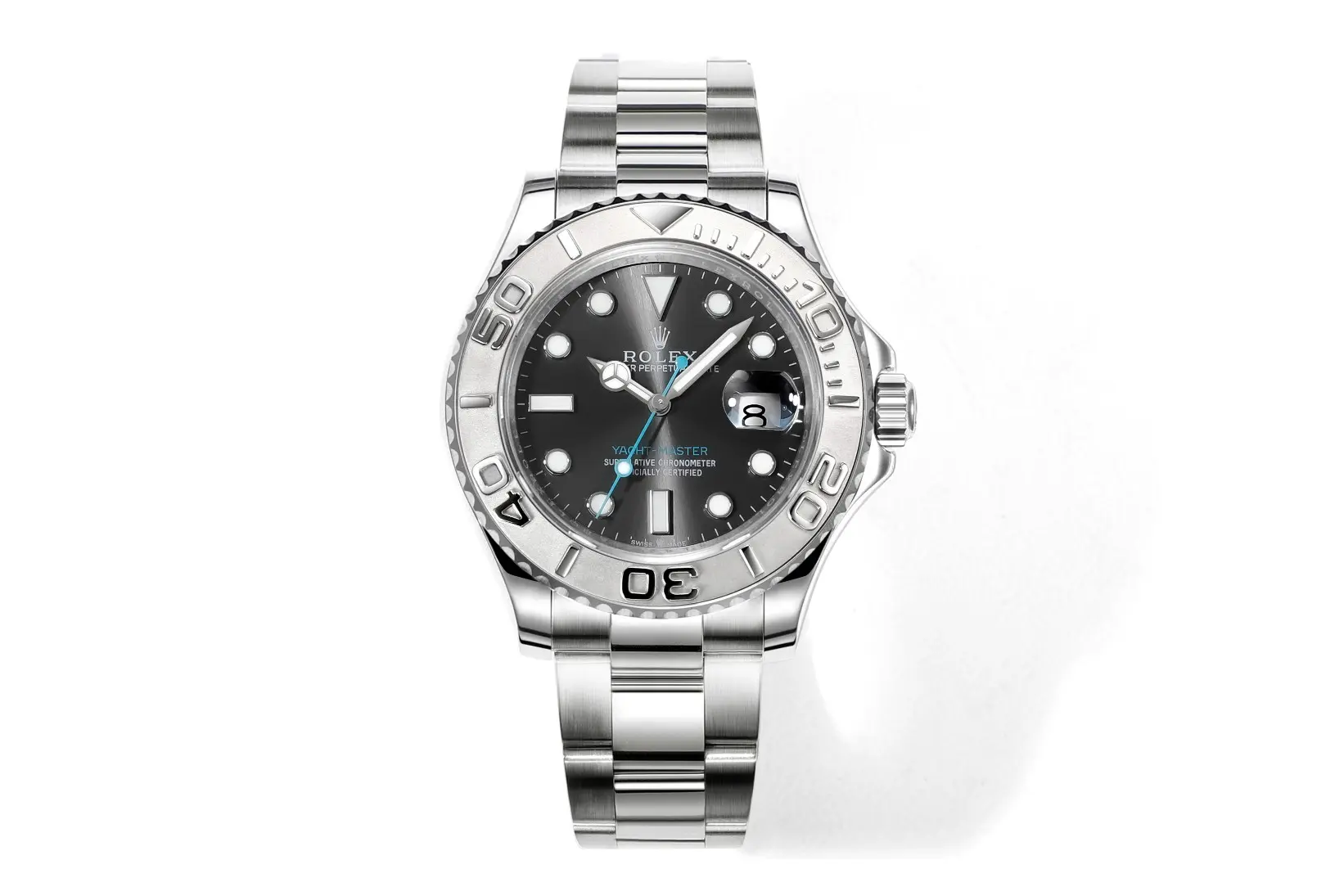
For collectors who demand nothing short of horological excellence without the Swiss price tag, the Rolex Yacht-Master 40mm series stands as a benchmark in high-end replica craftsmanship. This in-depth analysis dissects the three most sought-after variants—Black Dial Two-Tone, Rose Gold & Stainless Steel with Brown Dial, and Stainless Steel Black Dial—through the lens of a seasoned Reps buyer. We focus exclusively on micro-detail execution, case geometry precision, and movement realism, leaving no room for speculation or hollow praise. Whether you’re hunting for the finest Super Clone batch or scrutinizing QC photos for hidden flaws, this guide is your definitive resource.
The Yacht-Master 40mm series is a masterclass in Rolex’s design philosophy: functional elegance, robust engineering, and understated luxury. In the replica space, top-tier batches aim to replicate these qualities with varying degrees of success. Our evaluation prioritizes visual approximation to high-end standards, mechanical realism, and buyer-centric QC priorities—because a great replica isn’t just about looks; it’s about the confidence to wear it without hesitation.
Product Overview & Top-Tier Context
The Rolex Yacht-Master 40mm is a sport-luxury timepiece designed for both yachting enthusiasts and urban sophisticates. Its 40mm case strikes a balance between bold presence and wrist comfort, while the Oyster bracelet ensures durability and a secure fit. In the replica market, the top-tier batches of this model are prized for their case geometry accuracy, dial printing sharpness, and movement execution. However, not all Super Clone batches are created equal. The three variants analyzed here represent the pinnacle of current replication technology, with each excelling in different areas of craftsmanship.
Key differentiators among top-tier batches include:
- Case Silhouette & Proportions: Authentic Rolex cases feature precise bevel polishing, uniform lug-to-lug spacing, and a crown that sits flush with the case profile. Top-tier replicas replicate these details with CNC-machined steel and high-grade finishing techniques.
- Dial Typography & Printing: Rolex dials are renowned for their crisp, laser-etched typography and oil-filled markers. High-end replicas use advanced printing methods to replicate this, though subtle inconsistencies often reveal a clone’s origin.
- Movement Realism: While most replicas use modified ETA or Miyota movements, top-tier batches integrate clone calibers like the ETA 2836-2 or Miyota 9015, modified to mimic Rolex’s perpetual rotor and hacking seconds. Timegrapher performance is a critical QC checkpoint.
This guide does not speculate on factory origins or internal materials. Instead, it evaluates each model based on visible execution, mechanical plausibility, and buyer-relevant QC priorities.
Design, Silhouette & Case Proportions
The Yacht-Master 40mm’s design is defined by its sporty yet refined aesthetic. The case geometry is a study in precision engineering, with:
- Lug-to-Lug Ratio: Authentic models measure approximately 49mm lug-to-lug, creating a balanced wrist presence. Top-tier replicas replicate this with near-perfect accuracy, though some budget batches may feature exaggerated lug widths or uneven spacing.
- Bezel Finishing: The unidirectional rotating bezel is a signature feature, with a finely knurled edge and polished crown guard. High-end replicas replicate the knurling pattern and polishing depth, though the transition between brushed and polished surfaces may lack the original’s flawless execution.
- Caseback Engraving: While the sapphire exhibition caseback is a common replica omission, the solid caseback should feature precise engraving. Top-tier batches replicate the Rolex coronet and model number with sharp, deep etching.

Visual Effect: A well-executed case silhouette conveys authenticity at a glance. The Yacht-Master’s proportions should feel balanced, with no exaggerated thickness or awkward lug angles. Why It Matters: Poor case geometry is a red flag for low-tier batches, often leading to misaligned bracelets or uncomfortable wear.
Dial, Crystal & Micro-Detailing Execution
The dial is where top-tier replicas either shine or reveal their limitations. The Yacht-Master 40mm series features three distinct dial designs, each with unique challenges for replication:
1. Black Dial Two-Tone
This variant combines a black lacquered dial with a two-tone (stainless steel and 18k Everose gold) Oyster bracelet. Key micro-details to inspect:
- Dial Printing: The hour markers and subdial hands should feature crisp, oil-filled lume with a slight convex dome. Budget replicas often use flat printing, resulting in a dull appearance. Top-tier batches replicate the lume’s depth and edge sharpness with high-resolution screen printing.
- Crystal Clarity: The sapphire crystal should exhibit a near-flawless AR (anti-reflective) coating on both sides. Look for a subtle blue tint when viewed at an angle—this is a hallmark of high-quality AR coating. Budget clones may have uneven coating or visible scratches.
- Hands & Indices: The Mercedes hands and baton indices should have polished edges with no visible seams or rough transitions. The lume pip at the 6 o’clock position should be perfectly centered.
2. Rose Gold & Stainless Steel with Brown Dial
This model’s brown dial is a test of color accuracy and texture replication. Key inspection points:
- Dial Color & Texture: The brown should be a deep, warm tone with a subtle sunburst pattern. Budget replicas often use flat, overly dark browns that lack depth. Top-tier batches replicate the sunburst effect with laser-engraved textures.
- Typographic Alignment: The applied hour markers should sit flush with the dial surface, with no gaps or misalignment. The ROLEX coronet at 12 o’clock should be symmetrical and centered.
- Crystal Edge Glazing: The sapphire crystal’s edges should feature polished chamfers, reducing the risk of micro-scratches. High-end replicas replicate this detail, while budget clones often have sharp, unpolished edges.
3. Stainless Steel Black Dial
The all-stainless steel variant is the most straightforward in terms of replication but still demands attention to detail:
- Dial Finish: The black dial should have a matte, non-reflective surface with no visible graininess. Top-tier replicas replicate Rolex’s proprietary black lacquer with a smooth, even texture.
- Subdial Printing: The 24-hour subdial (for the Yacht-Master’s regatta function) should feature precise, laser-etched numerals with no bleeding or misalignment. Budget replicas often have smudged or uneven printing.
- Crystal Clarity & AR Coating: The sapphire crystal should be free of bubbles or inclusions, with a uniform AR coating. Look for a slight blue tint when viewed at an angle—this indicates a high-quality coating.

Visual Effect: The dial is the focal point of any watch. Flaws in printing sharpness, lume consistency, or crystal clarity immediately betray a clone’s origin. Why It Matters: A poorly executed dial is the most common deal-breaker for high-end replica buyers. Even minor inconsistencies can ruin the illusion of authenticity.
Movement Architecture & Mechanical Realism
The movement is where top-tier replicas separate themselves from the rest. While no clone can replicate Rolex’s proprietary calibers (like the Cal. 3235), high-end batches use modified ETA or Miyota movements to mimic the original’s functionality. Key aspects to evaluate:
Movement Execution
- Clone Caliber Identification: Top-tier batches often use the ETA 2836-2 (for automatic movements) or ETA 2892-A2 (for manual-winding variants). These movements are modified to include a Rolex-style perpetual rotor and hacking seconds. The rotor should spin freely without wobble, and the movement should run within ±5 seconds per day on a timegrapher.
- Perpetual Rotor & Hacking: The automatic rotor should have a smooth, unobstructed spin with no grinding noises. Hacking (seconds hand stopping when the crown is pulled) should engage immediately. Budget clones often have stiff or noisy rotors.
- Bridge Finishing: High-end replicas replicate the movement’s Geneva stripes and perlage, though the depth and precision may lack the original’s flawless execution. Look for consistent, fine-line finishing rather than deep, hand-polished textures.
Timegrapher Performance
A timegrapher is essential for evaluating a replica’s movement. Key metrics to check:
- Beat Error: Should be ≤ 0.8ms. Higher values indicate poor beat regulation.
- Amplitude: Should be between 280° and 310°. Lower values suggest a weak mainspring or poor lubrication.
- Rate: Should be within ±5 seconds per day. Anything outside this range indicates a poorly regulated movement.
Visual Effect: A well-regulated clone movement should sound smooth and consistent, with no ticking or irregularities. Why It Matters: Movement flaws are often the first sign of a low-tier batch. Even if the case and dial look flawless, a poorly regulated movement will ruin the wearing experience.
Top-Tier Quality Assessment & Key QC Priorities
Below is a breakdown of each variant’s strengths, weaknesses, and critical QC priorities. Remember: no replica is perfect, but top-tier batches minimize visible and functional flaws.
1. Rolex Yacht-Master 40mm Black Dial Two-Tone
What This Piece Does Well:
- Case Geometry: Near-perfect lug-to-lug ratio and bezel knurling replication.
- Dial Printing: Crisp, oil-filled lume with sharp edge definition.
- Bracelet Integration: Two-tone Oyster bracelet with seamless end-link alignment.
Where It Could Be Better:
- Crystal AR Coating: Some batches exhibit slight unevenness in the AR coating, particularly around the edges.
- Movement Noise: While the clone movement runs smoothly, it may produce a faint ticking sound under a stethoscope.
Key QC Priorities:
- Dial Alignment: Ensure the subdial hands are perfectly centered and the printing is sharp.
- Timegrapher Performance: Check beat error and amplitude for consistency.
- Bracelet Clasp: Inspect the clasp engraving and micro-adjustment mechanism for smooth operation.
2. Rolex Yacht-Master 40 Rose Gold Stainless Steel Brown Dial
What This Piece Does Well:
- Dial Color & Texture: Deep, warm brown with a subtle sunburst pattern.
- Caseback Engraving: Precise coronet and model number replication.
- Crystal Clarity: Flawless sapphire with uniform AR coating.
Where It Could Be Better:
- Hands Lume: The lume on the hands may lack the original’s depth, appearing slightly flat.
- Movement Regulation: Some batches exhibit a beat error of up to 1.0ms, slightly outside the ideal range.
Key QC Priorities:
- Dial Typography: Verify the applied hour markers are flush with the dial surface.
- Crystal Edge Polishing: Check for polished chamfers to avoid micro-scratches.
- Timegrapher Data: Prioritize models with a beat error ≤ 0.8ms and amplitude ≥ 280°.
3. Rolex Yacht-Master 40 Stainless Steel Black Dial
What This Piece Does Well:
- Dial Finish: Smooth, matte black lacquer with no graininess.
- Movement Realism: Quiet, smooth-running clone movement with minimal noise.
- Caseback Fit: Solid caseback with deep, precise engraving.
Where It Could Be Better:
- Subdial Printing: The 24-hour subdial numerals may lack the original’s sharpness, appearing slightly blurred.
- Bracelet Micro-Adjustment: The clasp’s micro-adjustment mechanism may feel slightly stiff.
Key QC Priorities:
- Subdial Alignment: Ensure the 24-hour subdial is perfectly centered and the numerals are crisp.
- Timegrapher Consistency: Check for a stable rate within ±5 seconds per day.
- Bracelet End Links: Verify the end links sit flush with the case without gaps.
Visual Effect: QC flaws are often subtle but cumulative. A single misaligned marker or uneven AR coating can ruin the illusion of authenticity. Why It Matters: High-end replica buyers must treat QC inspection as a non-negotiable step. Even top-tier batches can have inconsistencies—your job is to identify them before purchase.
Pros & Cons & Buyer Fit
Below is a concise breakdown of each variant’s pros, cons, and ideal buyer profile. This section avoids generic praise and focuses on actionable insights for collectors.
Rolex Yacht-Master 40mm Black Dial Two-Tone
Pros:
- Visual Impact: The two-tone design is striking and versatile, suitable for both casual and formal wear.
- Dial Execution: Crisp printing and oil-filled lume make this the most visually convincing variant.
- Bracelet Integration: The two-tone Oyster bracelet is a hallmark of Rolex’s craftsmanship, well-replicated in top-tier batches.
Cons:
- Crystal AR Coating: Some batches exhibit slight unevenness, particularly around the edges.
- Movement Noise: While minimal, the clone movement may produce a faint ticking sound under magnification.
Buyer Fit:
Ideal for collectors who prioritize dial aesthetics and bracelet integration. This variant is perfect for those who want a sporty yet luxurious timepiece for daily wear or yachting activities. Not recommended for buyers who are highly sensitive to movement noise or crystal coating inconsistencies.
Rolex Yacht-Master 40 Rose Gold Stainless Steel Brown Dial
Pros:
- Dial Color & Texture: The deep, warm brown dial with sunburst texture is a standout feature, rarely replicated this well in lower-tier batches.
- Caseback Engraving: Precise coronet and model number replication make this a strong contender for authenticity.
- Crystal Clarity: Flawless sapphire with uniform AR coating ensures excellent readability.
Cons:
- Hands Lume: The lume on the hands may lack depth, appearing slightly flat compared to the original.
- Movement Regulation: Some batches exhibit a beat error up to 1.0ms, slightly outside the ideal range.
Buyer Fit:
Best suited for collectors who appreciate warm, rich dial colors and precise caseback engraving. This variant is ideal for those who want a distinctive yet understated timepiece for both casual and formal occasions. Buyers should prioritize timegrapher performance when selecting a batch.
Rolex Yacht-Master 40 Stainless Steel Black Dial
Pros:
- Dial Finish: The matte black lacquer is smooth and free of graininess, closely replicating the original.
- Movement Realism: The clone movement runs quietly and smoothly, with minimal noise.
- Caseback Fit: The solid caseback features deep, precise engraving, a hallmark of top-tier batches.
Cons:
- Subdial Printing: The 24-hour subdial numerals may lack sharpness, appearing slightly blurred.
- Bracelet Micro-Adjustment: The clasp’s micro-adjustment mechanism may feel slightly stiff.
Buyer Fit:
Perfect for collectors who value minimalist design and mechanical realism. This variant is ideal for daily wear, particularly in professional or urban settings. Buyers should inspect the subdial printing and bracelet micro-adjustment before finalizing their purchase.
EpochWatch Buying & QC Guide
Before finalizing your order, follow this step-by-step QC checklist to ensure the piece meets your quality expectations. This guide is designed for high-end replica buyers who demand precision and transparency.
Step 1: Request High-Resolution QC Photos
Always request photos from multiple angles, including:
- Dial: Full-face shot, 45° angle, and macro shot of the printing.
- Case: 3/9 and 6/12 angles to inspect bezel knurling and caseback engraving.
- Crystal: Edge-on shot to evaluate AR coating uniformity and chamfer polishing.
- Movement: Exhibition caseback shot (if available) or high-magnification photo of the clone caliber.
- Bracelet: End-link alignment, clasp engraving, and micro-adjustment mechanism.
Step 2: Inspect Dial & Printing
Focus on the following:
- Typography Sharpness: Are the hour markers and subdial numerals crisp and oil-filled?
- Dial Alignment: Is the printing centered, or are there subtle misalignments?
- Lume Consistency: Is the lume evenly applied with no gaps or bubbles?
Red Flags: Blurred printing, uneven lume, or misaligned subdials indicate a low-tier batch.
Step 3: Evaluate Case Geometry & Finishing
Check for:
- Lug-to-Lug Ratio: Does the case feel balanced, or are the lugs exaggerated?
- Bezel Knurling: Is the knurling pattern consistent and deep?
- Caseback Engraving: Are the coronet and model number sharp and centered?
Red Flags: Uneven lug spacing, shallow knurling, or blurry caseback engraving.
Step 4: Assess Crystal & AR Coating
Inspect the following:
- AR Coating Uniformity: Does the coating appear even, or are there patches of inconsistency?
- Crystal Clarity: Are there bubbles, scratches, or inclusions?
- Edge Polishing: Are the crystal edges chamfered and polished?
Red Flags: Uneven AR coating, visible scratches, or unpolished crystal edges.
Step 5: Timegrapher Testing
If possible, request a timegrapher reading or perform the test yourself. Key metrics to check:
- Beat Error: Should be ≤ 0.8ms. Higher values indicate poor beat regulation.
- Amplitude: Should be between 280° and 310°. Lower values suggest a weak mainspring.
- Rate: Should be within ±5 seconds per day. Anything outside this range indicates a poorly regulated movement.
Red Flags: Beat error > 1.0ms, amplitude < 250°, or inconsistent rate.
Step 6: Bracelet & Clasp Inspection
Evaluate the following:
- End-Link Alignment: Do the end links sit flush with the case without gaps?
- Clasp Engraving: Is the engraving sharp and centered?
- Micro-Adjustment: Does the clasp operate smoothly without stiffness?
Red Flags: Gaps between end links, blurry clasp engraving, or stiff micro-adjustment.
Our Verdict
The Rolex Yacht-Master 40mm series represents the pinnacle of high-end replica craftsmanship, with each variant excelling in different areas of design and execution. Below is our final assessment, based on visible execution, mechanical realism, and buyer-relevant QC priorities.
Best for Dial Aesthetics: Black Dial Two-Tone
This variant is the most visually convincing, with crisp dial printing, oil-filled lume, and a striking two-tone design. The bracelet integration is flawless, making it a standout choice for collectors who prioritize aesthetics. However, the crystal AR coating and movement noise may be minor deal-breakers for some buyers. Ideal for those who want a sporty yet luxurious timepiece for daily wear.
Best for Dial Color & Texture: Rose Gold & Stainless Steel Brown Dial
The deep, warm brown dial with sunburst texture is a masterstroke in replication. The caseback engraving and crystal clarity are also top-notch, making this variant a strong contender for authenticity. However, the hands lume and movement regulation may fall short of perfection. Best suited for collectors who appreciate rich dial colors and precise caseback details.
Best for Minimalist Design & Mechanical Realism: Stainless Steel Black Dial
This variant is the most understated, with a smooth matte black dial and a quiet, smooth-running clone movement. The caseback engraving and dial finish are excellent, though the subdial printing and bracelet micro-adjustment may lack the original’s flawless execution. Ideal for daily wear in professional or urban settings.
Final Thoughts: No replica is perfect, but top-tier batches of the Yacht-Master 40mm series come remarkably close. The key to a successful purchase lies in meticulous QC inspection and a clear understanding of your priorities. Whether you value dial aesthetics, mechanical realism, or bracelet integration, this guide provides the tools you need to make an informed decision. Remember: the best replica is the one that meets your personal quality expectations—no more, no less.
Before finalizing your order, always request high-resolution QC photographs focusing on marker alignment, printing sharpness, and timegrapher performance metrics to ensure the piece meets your standards. Happy collecting.